What Is Manufacturing Ecommerce? Benefits, Examples & How It Works
Learn what manufacturing ecommerce is, how it works, and its key benefits. Explore B2B sales, automated quoting, integrations, and implementation.
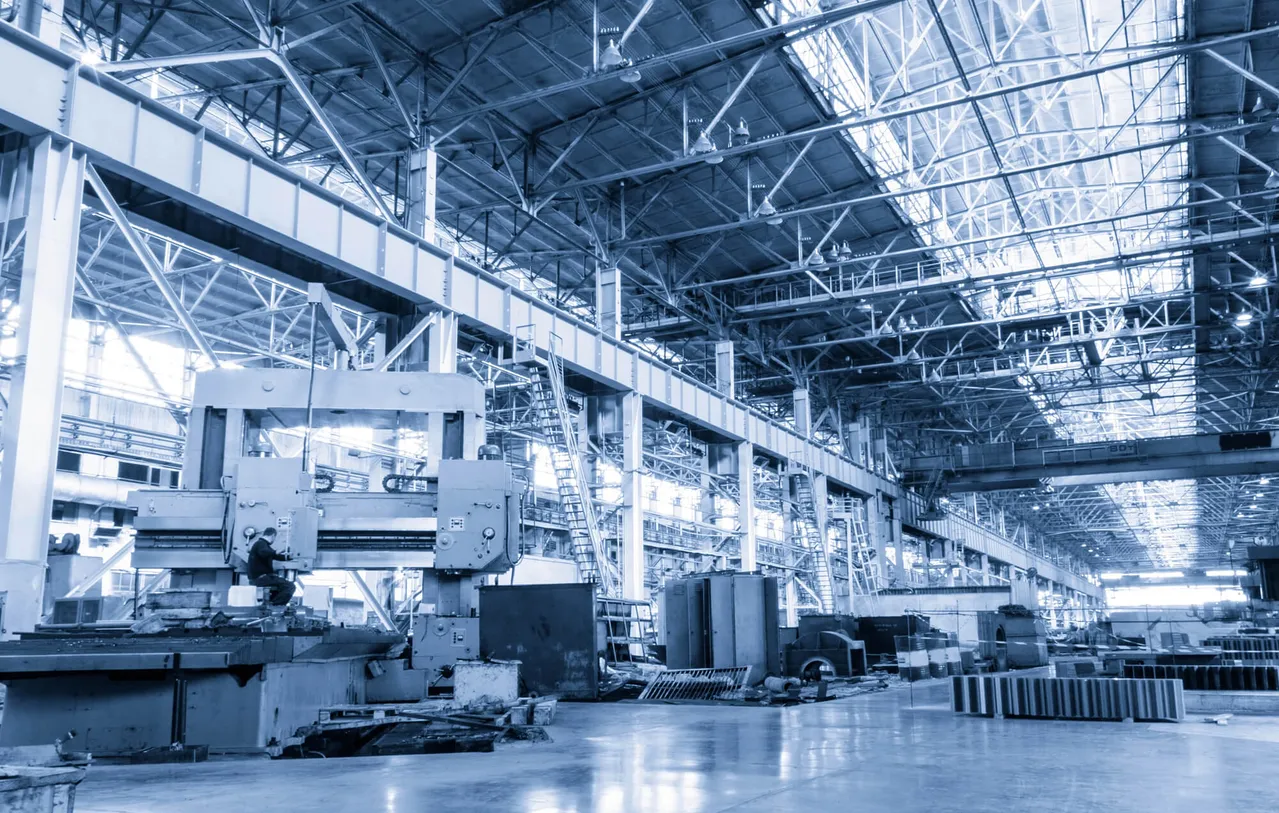
Manufacturing ecommerce is a digital sales channel allowing manufacturers to sell products, parts, and production capabilities online without engaging their sales teams. It's primarily an inbound process where customers come to manufacturers' websites for an independent purchasing experience and can complete an order on their own.
Ecommerce for manufacturers can take many forms: it can be an online catalog of standard industrial components or an automated CAD-based pricing calculation as part of custom sheet metal or CNC machining quoting software.
Manufacturers have been automating their production processes for decades, but sales is probably the last automation frontier left. Surprisingly, buying from many manufacturers still requires sending emails, making calls, sharing drawings, and waiting weeks to receive a quote.
But B2B customers want to buy online, just like they do elsewhere. According to McKinsey's 2026 Global B2B Pulse Survey, 71% of surveyed B2B companies now offer ecommerce, with roughly one-third of revenue flowing through digital channels among those that do. The study also found that 73% of B2B decision-makers were comfortable placing orders exceeding $50,000 online, compared with 59% in 2022.
This guide explains why the opportunity is bigger than adding another sales channel. Read on to learn how manufacturing ecommerce works, the business models behind it, and the essential features of ecommerce platforms, backed by real-life examples of manufacturers who've successfully implemented ecommerce capabilities.
What Is Manufacturing Ecommerce?
Manufacturing ecommerce is an automation layer that connects a manufacturer's commercial and operational processes with an online store, enabling digital buying and selling of manufactured products, custom parts, or services. Such platforms can be used by business customers, distributors, or even individual consumers.
The typical capabilities of a manufacturing e-commerce platform allow users to discover products, request quotes, place orders, and manage payments, packing, shipment, delivery notes, order tracking, and invoicing without leaving the digital storefront. Emails and phone calls are needed only for exceptions.
Apart from finished products or complex product configurations, ecommerce solutions also automate the quoting and selling of custom parts. For example, a sheet metal fabricator can offer its laser cutting or bending capabilities online, and the customer then configures the order using sheet metal quoting software and the part's CAD model.
Unlike conventional retail e-commerce, manufacturing ecommerce needs to account for more complex transactions with many variables:
- Customer-specific pricing and negotiated contracts
- Technical drawings, CAD files, and manufacturing specifications
- Variable quantities and production costs
- Configurable or made-to-order products
- Material availability and production lead times
- Engineering approvals and manufacturability checks
- Purchase orders, credit terms, and multiple account users
- Packing and shipping cost calculation
- Online payments
- Integration with enterprise resource planning (ERP), material requirements planning (MRP), and production systems
In this model, the manufacturer sells its production capabilities, not only predefined products. The difference is particularly important for custom manufacturing businesses.
Manufacturing E-commerce vs. Traditional E-commerce
| Traditional e-commerce | Manufacturing e-commerce | |
| What is sold | Primarily predefined products | Standard products, configurable products, custom parts, or manufacturing services |
| Product information | Descriptions, images, SKUs | Technical specifications, drawings, CAD files, manufacturing capabilities |
| Pricing | Mostly fixed or promotional | Contract-specific, volume-based, configured, or production-cost-based |
| Order requirements | Product, quantity, shipping address | May also include materials, tolerances, geometry, finishes, delivery requirements |
| Fulfillment | Usually inventory-driven | Inventory-driven, make-to-order, or engineer-to-order |
| Core integrations | Payments, inventory, shipping | ERP, MRP, CRM, CAD/CAM, production, logistics |
How Does Manufacturing Ecommerce Work?
Manufacturing e-commerce transforms the buying process for industrial products into a fully online transaction, from product discovery and configuration to order delivery. It connects the customer to a manufacturer's production capabilities so they can configure a product, get a price, place an order, and track it, all without a salesperson involved. Behind the scenes, the platform is connected to business systems to enable seamless integration of new orders into the production pipeline.
Regardless of whether a manufacturer sells stocked products, configurable equipment, or custom-made parts, most digital manufacturing sales processes follow four major stages.
Product Discovery and Online Catalogs
The customer journey starts with discovering products or manufacturing capabilities via the company's storefront. Because the storefront is online, customers in any market can find the offering. For custom manufacturers, rather than having a fixed product catalog or a product configurator, the storefront can instead showcase the available manufacturing processes and capabilities, with the option to order a custom part based on the customer's own CAD models.
RFQ Submission and Automated Quoting
Traditionally, a customer had to submit a formal request for quote (RFQ) so the manufacturer could evaluate technical requirements and prepare an offer.
Manufacturing e-commerce changes this completely.
For standard products, prices may be pulled directly from a catalog or ERP system. For configurable equipment, advanced CPQ software can calculate prices in real time for customized products based on selected product options and configuration rules. For custom parts, specialized instant quoting software can analyze CAD files and determine costs based on manufacturing requirements, delivering accurate quotes within seconds.
Example: CAD-based quoting with Oroox
Oroox Manufacturing Commerce automates CAD analysis, design-for-manufacturability checks, cost calculation, and customer-facing quotations as one digital manufacturing sales workflow.
A customer uploads a CAD file, configures the relevant part details, and receives a price almost instantly once the part passes the integrated manufacturability checks. When manufacturability, pricing, and delivery are validated, the instant quotation becomes a binding offer.
Order Processing and Production Integration
Manufacturing ecommerce platforms should automate more than just order placement. It's what happens with the order afterwards that matters: the transaction should be converted into a production-ready manufacturing order.
Order information is transferred automatically into production and downstream business systems: a bill of materials (BOM) is generated, the data flows into ERP or MRP software, and stock and order data stay synchronized in real time across ecommerce, CRM, and ERP.
For example, an integrated sheet metal e-commerce workflow may transfer approved part geometry, materials, processing requirements, quantities, and order details into downstream production planning.
This minimizes repeated data entry between sales, engineering, and operations. Online ordering is only operationally effective when the information reaching production is complete and reliable. Real-time inventory updates help prevent overselling and stockouts.
Customer Portals and Order Tracking
Customer portals are a convenient way for existing customers to track their order status, look up past quotes, and reorder in a few clicks, without having to start from scratch. This is especially valuable for customers who order the same custom components regularly.
Delegating these tasks to a customer portal doesn't mean there's no customer support available. But it can greatly reduce the workload of managing routine order updates, while exceptions can still be handled by technical and sales support specialists.
You may also like: How to choose sheet metal estimating software
Types of E-Commerce Models in Manufacturing
B2B, D2C, and B2B2C are all manufacturing e-commerce models that differ in who the end customer is. In B2B, manufacturers sell to other businesses; in D2C, they sell directly to consumers; and in B2B2C, they reach consumers through distributors and retailers. These models are not mutually exclusive: manufacturers increasingly combine several of them, which also helps them reach global customers without physical expansion. Make-to-order manufacturing cuts across all three and is covered separately below.
B2B Ecommerce for Manufacturers
Through B2B manufacturing ecommerce, manufacturing companies can sell directly to other businesses. This model is typically used by industrial equipment suppliers, contract manufacturers, and component manufacturers. To serve this model, an ecommerce platform should support account-specific prices, organizational accounts, quantity discounts, and repeat ordering, among other requirements.
Direct-to-Consumer (D2C) Manufacturing E-commerce
In D2C commerce, manufacturers reach their end consumers directly, skipping wholesalers and retailers as intermediaries. Think manufacturers selling furniture, home products or electronics.
D2C ecommerce gives manufacturers more control over branding, pricing, merchandising, and customer information. It also means they become responsible for marketing, returns, customer support, and order fulfillment. Such ecommerce platforms resemble digital retail storefronts in look and functionality.
B2B2C and Distributor Sales
The business-to-business-to-consumer (B2B2C) ecommerce model is based on having a network of distributors, dealers and retailers for selling a manufacturer's products.
In this case, digital commerce is a way to add convenience to existing partner relationships through distributor portals with catalogs, agreed pricing, product availability, quotations, order placement, and delivery tracking. In certain arrangements, the customer can start their journey on the manufacturer's website with online quoting or product configuration, which is then routed to a regional partner for fulfillment.
Make-to-Order and Custom Manufacturing Ecommerce
Custom manufacturing allows customers to order parts to be made to order, rather than selecting a particular finished product or standard machinery. Sheet metal fabrication, CNC machining, and additive manufacturing are typical examples of processes that follow this model. To order a custom part, a customer provides a CAD design, which is analyzed and priced based on its manufacturing characteristics. Custom manufacturing often also requires online configurators that capture complex specifications before pricing.
For custom parts manufacturers, having a proprietary digital storefront is a strategic opportunity. As they make their manufacturing capabilities available for purchase online, they can greatly expand their customer base across geographies without having to expand their estimation and sales resources.
Benefits of E-commerce for Manufacturing Companies
Traditional sales methods rely heavily on manual quoting and cross-team effort. Manufacturing ecommerce removes the need for manual calculations and time-consuming handoffs between teams. Its greatest value is in expanding quote processing capacity in both volume and geographic reach, helping manufacturers grow revenue without growing their headcount while delivering a better customer experience.
Above all, manufacturing ecommerce is a clear competitive advantage with customers who prefer to do business online, quickly and transparently.
Other benefits of ecommerce for manufacturing companies include:
- Growing revenue by capturing new demand. As customers expect a digital buying process even in B2B, a correctly executed ecommerce strategy can attract new orders, shorten sales cycles, and help manufacturers meet rising buyer expectations.
- Faster quoting and automated order processing that's impossible with traditional sales methods. Automated quoting reduces waiting times to minutes, while production preparation features fast-track the handover to production.
- Lower manual sales effort that was previously spent on repetitive RFQ review, customer data management, quote preparation, order confirmations, and responses to customer inquiries.
- Ability to serve customers with smaller orders that were uneconomical to serve before. Thanks to automation, sales capacity can be extended to smaller orders without creating extra burden.
- Improved customer experience through digital self-service, instant quoting, and convenient and transparent access to product and pricing information. Customer self-service is especially valuable for repeated orders from existing customers, routine purchases, and standard manufacturing requirements.
- International, 24/7 sales. An online manufacturing platform can make a company's capabilities accessible around the world, with no need to rely on local distribution networks. It also enables processing RFQs outside of normal business hours, capturing customer demand at a level impossible without such automation. Practical barriers remain, such as shipping costs, taxes, customs requirements, local regulations, language support, and production capacity, but e-commerce for the manufacturing industry can address many of them through shipping, tax, and compliance features.
- Higher pricing accuracy and sales visibility thanks to predefined costing models, centralized pricing data, and quoting analytics that serve as a snapshot of online sales performance. Manufacturers can instantly get insights into profitable and in-demand segments of their production, adjust their pricing strategies, and identify opportunities for investing in production capacity with clear business impact.
Manufacturing E-Commerce Case Studies and Real-World Examples
The following examples taken from Oroox's customer success stories illustrate the different strategies and business outcomes powered by the digital manufacturing business model.
A Dutch Precision Manufacturer Scales Revenue 4x
A precision manufacturer in the Netherlands was constrained by manual quoting and slow customer response times. Choosing to automate their manufacturing quotations, customer self-service and order processing with Oroox, they were able to:
- Grow their revenue 4x over four years
- Win more than 1,200 new customers
- Process 14,000+ online orders
- Quote over 200,000 parts
By making custom manufacturing services easier to purchase, the company grew its transaction volume to a level it could not have processed manually.
A German Sheet Metal Manufacturer Builds Its Own Digital Sales Channel
An established German sheet metal manufacturer moved from a third-party manufacturing marketplace to its own branded digital sales platform using Oroox.
The key results included:
- 6,900+ new customers acquired via the platform
- 108,186 parts quoted
- €22 million in digital sales volume
This case shows that having a proprietary digital commerce channel can be strategically valuable beyond just automating quotations.
A U.S. Manufacturer Reaches $100,000 in Monthly Online Revenue
A mid-sized U.S. manufacturer was able to replace their manual quoting processes and fragmented customer communication with Oroox-based digital commercial workflows and integrated order processing connected to the ERP system.
The manufacturer reported:
- $100,000 in monthly online revenue within 6 months
- 1,150 quotations generated
- Fully automated processing for the sales workflow covered by the implementation
By connecting their ERP and production operations to ecommerce, they created a truly scalable and reliable digital sales channel.
Essential Features of a Manufacturing Ecommerce Platform
When evaluating ecommerce in the manufacturing industry, look for platforms that offer the following key features.
Online Product Catalog and Configuration
Online catalogs of products and manufacturing capabilities with the ability to configure a custom order are central to manufacturing ecommerce. How they are presented depends on what customers buy and how they expect to buy it.
- For example, an industrial equipment manufacturer might structure their catalog around part numbers, specifications, technical documentation, product variants, and pricing.
- Sellers of configurable products might present a product configurator that prevents incompatible selections.
- Custom parts manufacturers might build a digital catalog of their production technologies, materials, dimensions, and processing options.
Instant Quoting and Manufacturing Cost Estimation
Manufacturing cost estimation is what distinguishes tailored solutions for manufacturing commerce from generic ecommerce software.
Custom manufacturers can't have typical product listings with fixed prices attached. Instead, they need to calculate exact prices for custom parts based on their configuration, material consumption, machining operations, nesting, labor costs, packaging, and margins. That's why under the hood of a manufacturing ecommerce system there should be an accurate and reliable cost estimating engine.
For example, Oroox's instant quoting software uses CAD geometry recognition, design-for-manufacturability checks, and configurable manufacturing rules to calculate prices for supported processes.
CAD File Upload and Custom Parts Ordering
CAD file upload is the first step to automated quoting and order placement for job shops and make-to-order manufacturers. A customer uploads a CAD file in a supported format (such as STEP, IGES, DXF, or native CAD) and the platform analyzes the part geometry, extracting the data needed for pricing calculation.
This feature also extends to design-for-manufacturability validation, selection of material, finish and quantity, and secure file handling to protect IP. Altogether, this shortens the path from a drawing to purchase, reducing the back-and-forth usually associated with traditional RFQs.
Oroox supports CAD-driven ordering for sheet metal fabrication, CNC machining, profile and tube processing, and additive manufacturing.
Customer-Specific Pricing and B2B Accounts
B2B ecommerce is relationship-driven. Your distributors, OEMs, and repeat customers expect that their negotiated prices will apply automatically when placing an order.
Manufacturing ecommerce platforms account for that through capabilities such as contract pricing, volume tiers, multi-user accounts with role-based access control for multiple stakeholders, credit limits, net payment terms, quote-to-order conversion with saved quotes and expiration dates, and access to order history.
Oroox provides customized pricing configuration within its Manufacturing Commerce. Custom pricing can be applied to different customer groups, commercial agreements, or regions.
Order Management and Customer Self-Service
A self-service portal is a hub of customer and order information, where existing customers can look up their order status and handle repeat orders without contacting a salesperson.
Oroox's manufacturing ecommerce platform provides end-to-end CAD-to-order automation, with dedicated modules for customer self-service, customer relationship management, and order management. Easy reordering is particularly important for driving repeat purchases and customer loyalty.
What Else Should Manufacturers Evaluate?
There are other underlying technical and operational requirements for a functional manufacturing ecommerce solution:
| Requirement | Questions to ask |
| ERP and production integration | Can accepted orders move into ERP/MRP without manual re-entry? |
| Manufacturing validation | Can unsupported geometries or specifications trigger review? |
| Pricing governance | Who maintains cost parameters, margins, and approval limits? |
| Data security | How are confidential CAD files, customer information, and intellectual property protected? |
| Global commerce | Can the system manage currencies, taxes, languages, entities, and shipping rules? |
| Workflow customization | Can the manufacturer adapt approval steps and exception handling? |
| Scalability | Can the platform support additional plants, processes, markets, and order volumes? |
| Analytics | Does reporting distinguish quotation volume, actual sales, profitability, and manual processing effort? |
Manufacturing Ecommerce Integration: How to Implement Ecommerce
Selecting ecommerce tools is relatively straightforward. The primary challenge is how to connect online sales to manufacturing operations. Most implementation projects stumble on processes and data, not on the software, so use this roadmap to stay on track.
1. Assess Existing Sales and Quoting Workflows
Start by identifying where customers would benefit most from automation. Analyze the entire buying journey and a selection of your historical quotes to see how quickly and efficiently they converted into orders. Then set baseline metrics for your upcoming ecommerce project, such as RFQ response time, estimating effort, quote-to-order conversion and repeat orders.
2. Select the Appropriate Digital Sales Model
From the available digital sales models, choose the one that fits your business best. This could mean setting up a product catalog and reorder portal, instant custom parts quoting, or even listing on specialized marketplaces if you don't want to maintain your own ecommerce infrastructure.
Your sales and support teams should also be on board with this digital transformation. Their buy-in will be crucial for the new sales processes to take hold, so set clear rules that prevent conflict between the online channel, your sales reps, and your broader distribution network.
3. Define Platform and Integration Requirements
When an order comes in, it needs to go straight to production. For this, your ecommerce platform needs to communicate with shop floor systems automatically so that nobody has to retype the information by hand.
When choosing an ecommerce platform, check if it connects to your ERP/MRP, CRM and PIM, how it connects to these systems (natively, via an API or webhooks?), and if it requires any custom development for integrations. A platform that looks affordable can turn expensive once you add all the integration work that isn't included out of the box.
4. Digitize Pricing, RFQ, and Ordering Processes
To check if your processes are ready for ecommerce, conduct this quick test: can a hypothetical new employee figure out how to price a job and validate it technically based on the available documentation alone?
If not, you should write down the rules before automation comes in. Ecommerce software can only follow rules that exist on paper.
5. Launch a Pilot and Measure Results
Think small, then scale. You don’t have to digitize your entire range of manufacturing services at once.
- Choose one high-priority product line or a process that gets many repetitive RFQs
- Set clear targets such as quote turnaround time and quote-to-order conversion
- Judge the pilot by its commercial and operational results
- Once you’re satisfied with the performance, scale to other products and processes
This incremental rollout of manufacturing ecommerce will also help your sales and support teams get accustomed to the new workflows before they’re scaled throughout your operations.
Key Actions to Run Manufacturing Ecommerce Successfully for Custom Parts
Launching the platform is only the start. Buyers of custom parts can upload the same CAD file to several suppliers and compare offers within minutes, so whether your online channel actually wins orders depends on four things.
Offer Competitive Prices
An instant quote makes your price visible and comparable immediately, with no salesperson to explain it. Calibrate your cost models (machine hourly rates, material prices, setup times, and margins) against real job costs and review them regularly. Pass on part of what automation saves you in estimating effort, especially on small and repeat orders, and use quantity tiers and customer-specific pricing where they apply. Track quote-to-order conversion by process, material, and order size to see where your prices are off the market.
Deliver Fast Production Lead Times
A quote in seconds loses its value if the part takes weeks to arrive. Online buyers often decide on the delivery date as much as on the price. Show realistic lead times in the quote based on current capacity and material availability, offer an express option at a surcharge, and plan capacity for online orders so they are not pushed behind larger jobs. Above all, keep the dates you promise: delivery reliability is what turns a first order into repeat business.
Market and Advertise the New Service Online
An online shop does not generate traffic on its own. Treat the launch like a new product: introduce it to existing customers first and encourage them to place repeat orders through it. To win new customers, build search-optimized landing pages for each process and material, run search ads on high-intent keywords, and put a clear “upload your CAD file” call to action on your homepage. Measure the cost per new customer and per first order so you know which channels are worth scaling.
Fully Automate the Integration Flow
Every manual step between the customer's click and the shop floor costs margin and time. An accepted order should flow automatically from payment and order confirmation into ERP or MRP, production planning, and nesting, and then on to packing, shipping, delivery notes, invoicing, and status updates back to the customer. Your team should only step in for exceptions, such as a failed manufacturability check or an unusual specification. A useful measure is the share of orders processed without any manual touch.
These four actions reinforce each other: competitive prices and short lead times win the order, marketing brings buyers to the storefront, and full automation keeps both sustainable as volume grows.
Conclusion
The foundation of manufacturing ecommerce is making manufacturing capabilities easier to buy. Sales and fulfillment processes become more scalable, while customer retention improves through easier reordering and customer self-service automation.
This is a completely new business model that requires the right mindset, organizational change management, and team readiness. But once it's there, manufacturers can scale their sales to a level that wasn't possible before, without having to grow their team or invest heavily in outbound marketing.
Make your manufacturing capabilities purchasable online with Oroox
Frequently Asked Questions
What is manufacturing e-commerce?
Manufacturing e-commerce is a digital sales channel for manufacturers that includes an online storefront with a product or capability catalog and integration with back-office systems such as ERP/MRP and downstream systems for production handoff. It supports automated quoting, lead time calculation, shipping and order management.
Will AI replace e-commerce?
No, AI is unlikely to replace ecommerce, but it can augment it with faster RFQ document analysis, manufacturability recommendations, and customer communication assistance. AI can also complement CAD analysis and rule-based cost estimation.
What is the 80/20 rule in ecommerce?
This rule, known as the Pareto principle, means that 80% of value comes from 20% of effort. Applied to ecommerce, it can mean that 80% of your revenue may come from just 20% of products or customers. The exact ratio, however, should always be double-checked against your own analytics.
Why does e-commerce matter for manufacturers?
The greatest value of ecommerce for manufacturers of any size is that it can lower customer acquisition and estimation costs by digitizing repeat orders, automating RFQ processing, and reducing manual sales administration. The value also comes from boosting revenue and expanding the reach to potential customers across geographies.
How is manufacturing e-commerce different from traditional e-commerce?
The key differences between manufacturing ecommerce and traditional ecommerce lie in the complexity and variability of manufacturing products. That's why manufacturing ecommerce platforms include complex pricing and costing models, product configuration, CAD-based part geometry analysis, backend CRM and ERP integration, and customer self-service to automate custom part quoting and order processing.
Why do 84% of companies fail at digital transformation?
The often-cited 84% failure rate refers to digital transformation projects that fell short of their key stakeholders' expectations. Common reasons include treating the project as a technical rather than a business transformation, a lack of clear vision and strategy, resistance to change, and fragmented data and processes.
What is the best example of digital transformation?
Manufacturing ecommerce is a good example of digital transformation as it has all the essential transformational qualities: it requires adopting new business models, rethinking existing business processes, integrating a new technology, and training the sales and support teams to handle new workflows.
You may also like

Sales Automation in Manufacturing: Benefits, Tools & Examples
The New Normal for B2B Sales: E-Commerce for custom parts

How the Young Generation is Revolutionizing Corporate Purchasing Behavior through Digital E-Commerce Systems

How do manufacturing clients feel ordering Online?
Automate or Die. 6 Reasons why Manufacturers need Online Sales